
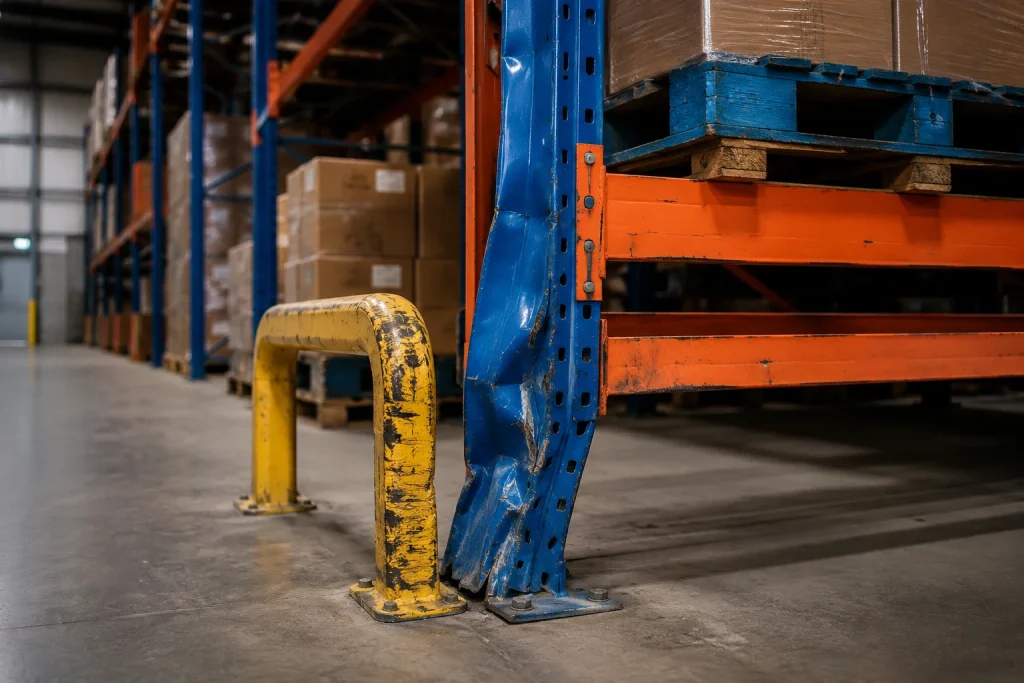
Warehouse racking systems are essential for maximizing storage capacity, improving inventory organization, and making better use of available floor space. However, warehouse racks are exposed to forklifts, pallet movement, heavy loads, frequent loading and unloading, and daily operational activity. Without proper handling and maintenance, even a strong racking system can become damaged over time.
Rack damage is more than a cosmetic issue. Bent uprights, damaged beams, loose connections, and overloaded shelves can reduce the structural stability of a storage system and increase the risk of pallet or product failure. Understanding the common causes of warehouse rack damage can help businesses take preventive measures, improve workplace safety, and extend the service life of their storage equipment.
Forklift Impact
Forklift collisions are one of the most common causes of warehouse rack damage. During loading, unloading, and material movement, forklifts operate close to rack uprights and beams. Poor visibility, excessive speed, narrow aisles, or incorrect maneuvering can cause the forklift to strike the racking system.
Even a minor impact can bend an upright or damage its protective coating. Repeated impacts may gradually weaken the rack structure.
Installing column guards, end-of-aisle protection, and proper safety barriers can help reduce the risk of forklift-related damage.
2. Overloading the Racking System
Every warehouse rack has a specific load-bearing capacity. Exceeding the recommended capacity can place excessive stress on beams, frames, connectors, and other components.
Overloading may result from storing heavier products than originally planned, incorrectly estimating pallet weights, or failing to follow the manufacturer’s load specifications.
Warehouse operators should clearly display load capacity information and ensure employees understand the maximum permissible load for each rack level.
3. Improper Loading and Unloading
Incorrect pallet placement can also contribute to rack damage. Pallets should be positioned evenly and securely on the supporting beams. When pallets are placed too far forward, backward, or to one side, the load may become unstable.
Forklift operators should approach racks carefully and position pallets without striking beams or uprights. Training employees on correct loading procedures can significantly reduce accidental damage.
4. Poor Pallet Condition
Damaged or weak pallets can create additional risks for warehouse racking. Broken boards, cracked runners, missing components, or unstable pallet construction may cause products to shift or fall.
A damaged pallet can also place uneven pressure on rack beams. Before storing goods, warehouse teams should inspect pallets and remove those that are unsafe or unsuitable for racking systems.
5. Incorrect Rack Installation
Professional installation plays an important role in rack safety. If frames are not properly aligned, beams are incorrectly connected, or anchoring is inadequate, the system may not perform as intended.
Poor installation can also create uneven load distribution and increase the possibility of structural movement.
Warehouse racking should be installed according to the manufacturer’s specifications and applicable safety requirements. Proper alignment, anchoring, bracing, and component selection are essential for a stable system.
6. Lack of Regular Inspections
Warehouse rack damage can become more serious when it is not identified early. Small dents, bent components, damaged connectors, and loose anchors may initially appear insignificant, but continued use can make the problem worse.
Regular inspections help warehouse managers identify damage before it becomes a major safety concern. Inspections should cover uprights, beams, braces, connectors, anchors, pallets, and other structural components.
Any seriously damaged component should be assessed and repaired or replaced by a qualified professional before the rack is returned to normal use.
7. Poor Warehouse Layout
An inefficient warehouse layout can increase the likelihood of rack damage. Narrow aisles, insufficient turning space, poorly positioned racks, and congested traffic routes make it more difficult for forklifts to operate safely.
A well-planned layout should provide sufficient clearance for forklifts and pedestrians while maintaining efficient movement throughout the facility.
Separating pedestrian pathways from forklift traffic and clearly marking operating zones can further improve safety.
8. Untrained Warehouse Employees
Human error is another significant contributor to rack damage. Employees who are unfamiliar with load limits, forklift operating procedures, or rack safety practices may unintentionally damage storage systems.
Regular training should cover safe forklift operation, correct pallet placement, rack load capacities, inspection procedures, and reporting of damaged components.
Employees should also understand that rack damage must be reported immediately rather than ignored.
9. Uneven or Unstable Loads
Unevenly distributed loads can place additional stress on individual rack components. When products are stacked incorrectly or loads are concentrated on one side of a pallet, the rack may experience uneven pressure.
Heavy items should generally be stored according to the rack design and operational requirements, with proper weight distribution across the supporting structure.
Stable pallet loads also reduce the risk of products falling into aisles or onto workers.
10.Environmental Conditions
Environmental factors can contribute to rack deterioration. Moisture, humidity, chemicals, extreme temperatures, and corrosive substances can affect metal components over time.
This is particularly important in cold storage facilities, food-processing environments, chemical warehouses, and other locations where racks may be exposed to challenging conditions.
Selecting suitable materials and protective finishes, along with maintaining appropriate environmental conditions, can help minimize corrosion and deterioration.
11. Unauthorized Rack Modifications
Warehouse operators sometimes modify racking systems to accommodate changing storage requirements. Adding beams, removing braces, changing shelf levels, or replacing components with unsuitable alternatives can affect the original design of the rack.
Any modification should be evaluated carefully and carried out according to the manufacturer’s recommendations or by a qualified racking professional.
A rack should never be modified simply because a particular configuration appears convenient.
12. Lack of Rack Protection
Rack protection systems can significantly reduce damage caused by warehouse traffic. Upright guards, column protectors, safety barriers, bollards, and end-of-aisle guards can absorb or deflect impacts before they reach critical rack components.
For warehouses with high forklift activity, investing in appropriate protection can help reduce repair costs and improve overall workplace safety.
How to Prevent Warehouse Rack Damage
Preventing rack damage requires a combination of good design, proper installation, employee training, routine inspections, and safe warehouse operations.
Businesses can reduce the risk of damage by:
- Following the manufacturer’s recommended load capacities.
- Training forklift operators and warehouse employees.
- Installing upright and end-of-rack protection.
- Conducting regular rack inspections.
- Replacing damaged pallets immediately.
- Keeping aisles clear and properly marked.
- Avoiding unauthorized modifications.
- Maintaining appropriate clearance around racks.
- Reporting rack damage immediately.
- Repairing or replacing damaged components promptly.
A proactive approach is usually more cost-effective than waiting until rack damage becomes a major structural or safety problem.
Why Regular Rack Maintenance Matters
Warehouse racking is a long-term investment, and proper maintenance helps protect that investment. Regular inspections allow businesses to identify potential problems early and prevent minor damage from developing into expensive repairs or operational disruptions.
Well-maintained racks also support better warehouse organization. When storage systems remain stable and properly configured, employees can handle inventory more efficiently while reducing unnecessary operational risks.
Warehouse managers should establish a documented inspection and maintenance schedule based on rack usage, warehouse conditions, equipment traffic, and the manufacturer’s recommendations.
Conclusion
Warehouse rack damage can result from forklift impacts, overloading, improper loading, damaged pallets, poor installation, inadequate inspections, warehouse congestion, environmental conditions, and unauthorized modifications. Identifying these risks early is essential for maintaining a safe and productive warehouse.
By combining high-quality racking systems with proper installation, employee training, rack protection, regular inspections, and responsible maintenance, businesses can improve storage safety and extend the service life of their warehouse infrastructure.
For durable and efficient warehouse storage solutions, Orientech Racking can help businesses select racking systems designed around their storage requirements, operational needs, and available warehouse space.
Frequently Asked Questions
1. What is the most common cause of warehouse rack damage?
Forklift impact is one of the most common causes of warehouse rack damage. Collisions with uprights, beams, and other components can weaken the structure and should be inspected immediately.
2. How can warehouse rack damage be prevented?
Warehouse rack damage can be reduced through proper installation, forklift operator training, regular inspections, correct loading practices, load-capacity compliance, and the use of rack protection such as upright guards and safety barriers.
3. Can a damaged warehouse rack still be used?
A seriously damaged rack should not continue to be used without professional assessment. Bent uprights, damaged beams, loose connections, or compromised components may affect structural safety and should be repaired or replaced appropriately.