
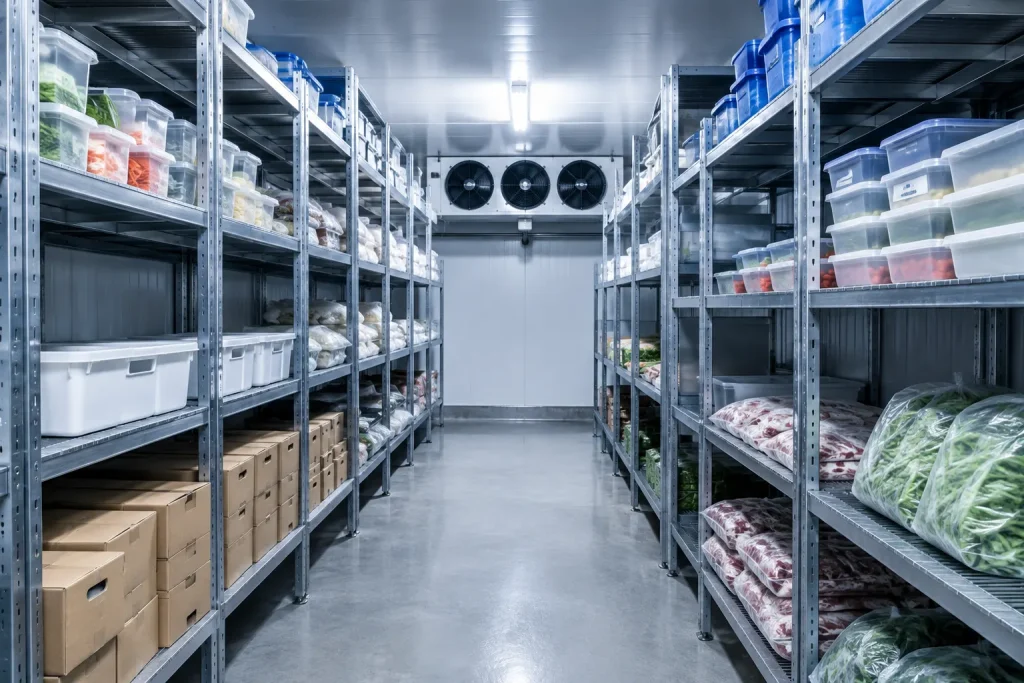
Cold storage facilities play an essential role in industries such as food processing, pharmaceuticals, dairy, beverages, chemicals, and frozen goods. These facilities require carefully controlled temperatures and efficient storage systems to protect products from spoilage, contamination, and damage. While temperature control is important, the right storage infrastructure is equally critical.
Cold storage shelving systems are designed to organize products efficiently while making maximum use of available warehouse space. Unlike conventional shelving, cold storage shelving can be selected and configured to suit low-temperature environments, product weights, storage requirements, and operational workflows. A well-designed shelving system can improve accessibility, inventory management, safety, and overall warehouse productivity.
What Are Cold Storage Shelving Systems?
Cold storage shelving systems are storage structures designed for refrigerated, chilled, and frozen environments. They provide dedicated locations for storing cartons, containers, food products, pharmaceutical items, ingredients, and other temperature-sensitive goods.
Depending on the facility’s requirements, businesses can choose from different shelving and racking configurations, including adjustable shelving, boltless shelving, pallet racking, mobile shelving, and other high-density storage solutions.
The system should be selected based on factors such as storage temperature, product dimensions, load capacity, available floor space, forklift requirements, and inventory turnover.
Maximizes Available Storage Space
One of the biggest benefits of installing cold storage shelving systems is better utilization of warehouse space. Cold storage facilities are expensive to operate because refrigeration systems consume significant amounts of energy. Therefore, businesses need to make the most of every available square meter.
Properly designed shelving allows products to be stored vertically rather than occupying excessive floor space. Multi-level storage can increase storage capacity without requiring a major expansion of the facility.
This is particularly beneficial for warehouses dealing with large volumes of frozen or refrigerated products.
2. Improves Inventory Organization
Cold storage warehouses often handle hundreds or thousands of products with different sizes, expiry dates, and storage requirements. Without an organized shelving system, finding specific products can become difficult and time-consuming.
Shelving systems create designated storage locations for different product categories. Items can be arranged according to SKU, product type, batch number, expiry date, or frequency of movement.
Better organization helps warehouse employees locate products quickly and reduces the possibility of misplaced inventory.
3. Makes Better Use of Vertical Space
Cold storage facilities can benefit significantly from vertical storage. Instead of spreading inventory across the floor, shelving and racking systems allow businesses to utilize the available height of the facility.
Vertical storage can increase capacity while keeping aisles properly organized. However, the height and configuration of the shelving system should be planned according to ceiling height, equipment capabilities, safety requirements, and operational needs.
4.Enhances Product Accessibility
Efficient product access is essential in cold storage environments because employees may need to work quickly in low-temperature conditions.
Well-positioned shelving provides clear access to stored goods and helps employees identify and retrieve products efficiently. Adjustable shelves can also accommodate products with different dimensions.
For facilities with frequently moving inventory, an appropriate shelving configuration can help reduce unnecessary movement and improve picking efficiency.
5.Supports Better Inventory Management
An organized shelving system makes stock monitoring easier. When products have dedicated storage positions, warehouse teams can quickly determine where items are stored and how much inventory is available.
Businesses can also implement inventory rotation methods such as FIFO (First In, First Out) for products that need to be dispatched according to their storage dates.
Effective inventory management can reduce product wastage, improve stock accuracy, and help businesses maintain better control over temperature-sensitive goods.
6. Improves Warehouse Safety
Safety is especially important in cold storage environments because condensation, moisture, slippery floors, limited visibility, and heavy loads can create additional risks.
A properly designed shelving system keeps products securely stored and reduces clutter in working areas. Clearly defined aisles and storage locations can also improve movement for employees and material-handling equipment.
Shelving systems should be selected according to the required load capacity and installed correctly to provide stable and reliable storage.
7. Helps Reduce Product Damage
Improperly stacked products can fall, become crushed, or suffer packaging damage. This can result in product loss and additional operating costs.
Cold storage shelving provides designated storage positions that keep products elevated and organized. By preventing excessive stacking and improving product separation, shelving can help reduce unnecessary damage.
For sensitive products, the shelving configuration can also be customized to accommodate specific packaging and handling requirements.
8. Increases Operational Efficiency
Warehouse employees can spend considerable time searching for products or moving inventory when storage areas are poorly organized. A suitable shelving system can simplify these processes.
Products can be arranged based on movement frequency, allowing high-demand items to be positioned in easily accessible areas. This can reduce picking and retrieval time while improving overall workflow.
As a result, businesses can handle more orders without necessarily increasing their workforce or expanding their storage facility.
Supports Different Storage Requirements
Cold storage facilities rarely store products of exactly the same size and weight. A flexible shelving system can accommodate different product dimensions and storage requirements.
Adjustable shelving allows shelf levels to be modified when inventory requirements change. Heavy-duty configurations can support heavier products, while lighter shelving can be used for smaller packages.
This flexibility makes shelving systems suitable for a wide range of cold storage applications.
10. Provides Long-Term Storage Value
Investing in a quality shelving system can provide long-term benefits for cold storage operations. Durable shelving can withstand demanding warehouse environments when the correct materials, finishes, load capacities, and installation methods are selected.
Businesses should consider not only the initial cost but also durability, maintenance requirements, storage capacity, accessibility, and future expansion needs when selecting a system.
A properly planned shelving solution can therefore contribute to lower operational inefficiencies and better use of warehouse infrastructure over time.
How to Choose the Right Cold Storage Shelving System
Selecting the right shelving system requires an understanding of the facility’s operational requirements. Businesses should consider:
- Temperature: Determine whether the system will be used in chilled, refrigerated, or frozen conditions.
- Load capacity: Select shelving according to the weight of products being stored.
- Storage height: Consider the available ceiling height and vertical storage opportunities.
- Product dimensions: Choose shelf sizes that accommodate different product types.
- Inventory movement: Consider whether products require FIFO or other inventory rotation methods.
- Material and finish: Select materials and finishes suitable for cold and potentially humid environments.
- Accessibility: Ensure shelves provide safe and convenient access to stored products.
- Future expansion: Choose a system that can be modified or expanded as storage requirements increase.
Conclusion
Cold storage shelving systems are an important part of an efficient and organized refrigerated or frozen warehouse. They help maximize storage capacity, improve inventory organization, enhance product accessibility, support safer operations, reduce product damage, and improve overall warehouse productivity.
The right shelving solution should be selected according to temperature conditions, product characteristics, load requirements, available space, and inventory movement. Investing in a well-designed system can help businesses make better use of their cold storage facility while supporting long-term operational efficiency.
For reliable warehouse storage solutions, Orient Tech Racking can help businesses select and implement suitable racking and shelving systems based on their specific storage requirements. With the right storage infrastructure, businesses can create a more organized, accessible, and productive cold storage environment.
Frequently Asked Questions
1. What are cold storage shelving systems?
Cold storage shelving systems are storage structures designed for refrigerated, chilled, and frozen environments. They help organize temperature-sensitive products while maximizing available storage space.
What are the benefits of cold storage shelving?
The main benefits include increased storage capacity, better inventory organization, improved product accessibility, safer warehouse operations, reduced product damage, and greater operational efficiency.
3. Can shelving systems be used in frozen storage facilities?
Yes. Shelving systems can be designed for refrigerated and frozen environments. The materials, finishes, load capacity, and configuration should be selected according to the facility’s temperature and operating conditions.